
How to Redesign an Elementor Website With AI
Learn how to redesign an Elementor website with AI and migrate your existing content without rebuilding everything from scratch.

Introduction
Elementor is a popular tool for making a WordPress website without writing code. But if you want to redesign an existing Elementor site, it's extremely manual. You have to open the editor and make every change yourself through their settings panels and widgets.
AI tools are good enough now that you can build a website with the same level of design freedom, but without manually managing WordPress. You can change anything on the website by asking AI in a chat window. And if you already have an Elementor site, you can migrate your content automatically instead of starting from scratch.
In this guide, I'll show you how to redesign an Elementor website with a new AI tool called Repaint.
Why Redesign an Elementor Website with AI?
The biggest difference is the editing experience. In Elementor, you select a widget and make changes through its settings panel. In Repaint, you type what you want changed and the AI applies it. It can change one section or make the same update throughout the site.
The second difference is maintenance. Repaint manages the platform for you. You no longer have to maintain a hosting account or keep WordPress plugins up to date.
Until recently, leaving Elementor meant manually recreating your website in another platform. Repaint uses the existing Elementor website as source material and automatically migrates your content. You can redesign your website without starting from scratch.
How AI Website Migration Works
Repaint visits your live Elementor site the way a customer would. It reads your text, downloads your images, and takes screenshots of every page to learn the layout. From that material, it rebuilds your site. Afterward, you make changes by chatting with AI. It doesn't need an Elementor export or access to your WordPress dashboard, and nothing in Elementor is modified.
You also don't commit to anything by starting. Your Elementor site stays live while you build, and your visitors keep seeing it until you point your domain at the new site. If you stop halfway through, nothing has changed.
Step 1: Import Your Content
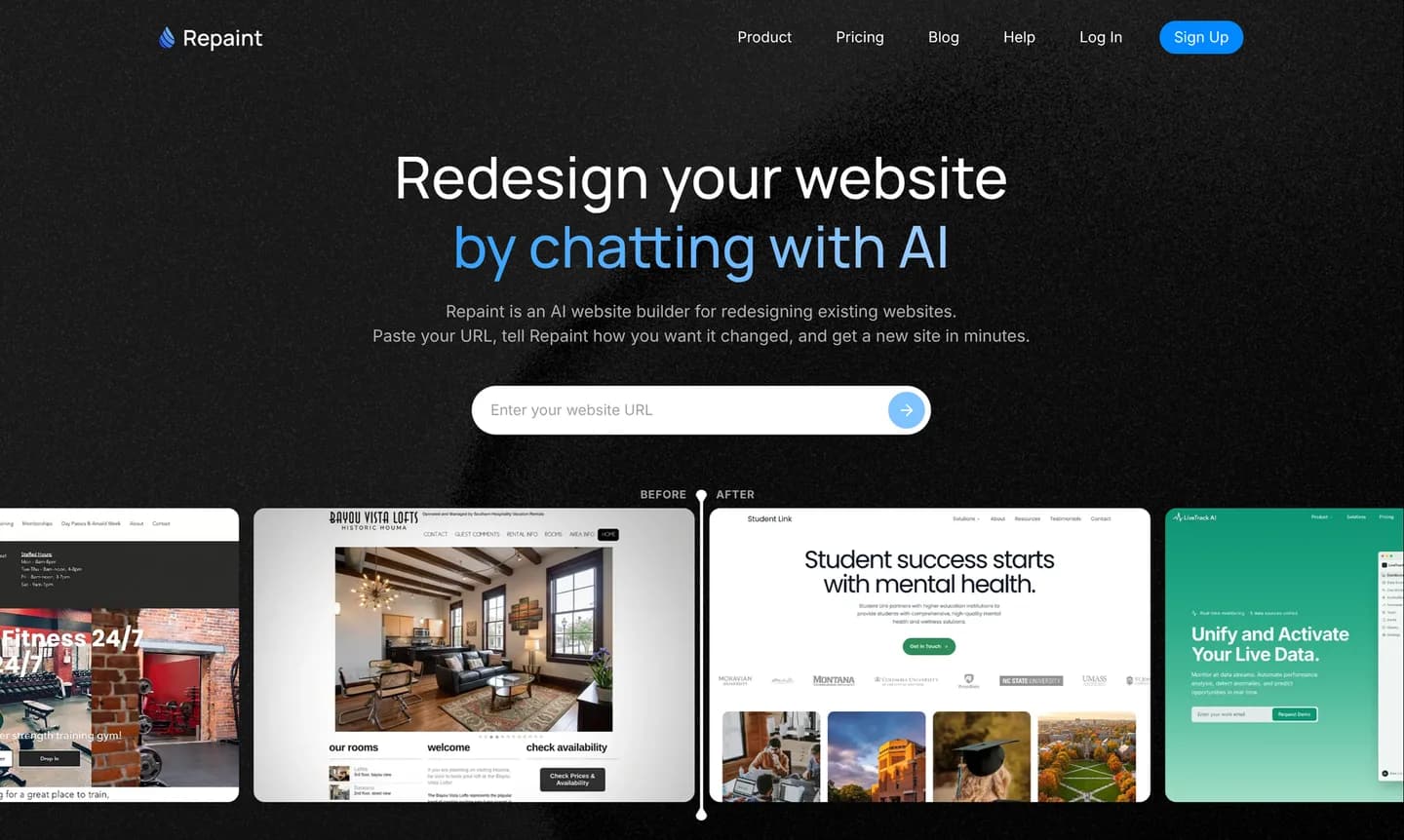
To begin, you'll need the URL of your live Elementor website:
- Go to the AI tool for redesigning websites.
- Paste in your Elementor website URL and submit.
- Create a Repaint account.
Any publicly available Elementor site works, whether it is self-hosted or uses managed WordPress hosting. If the scan misses anything, you can add it through the chat or upload it as a file.
For a large site, importing the main pages and a few representative blog posts first usually works best. Repaint accounts for the size of your existing website when it makes the plan, so it may not rebuild everything in the first pass. The remaining posts can come over in batches once the layouts look right. This also keeps one large import from using the trial's AI allowance before you have reviewed the design.
Step 2: Generate Your Website
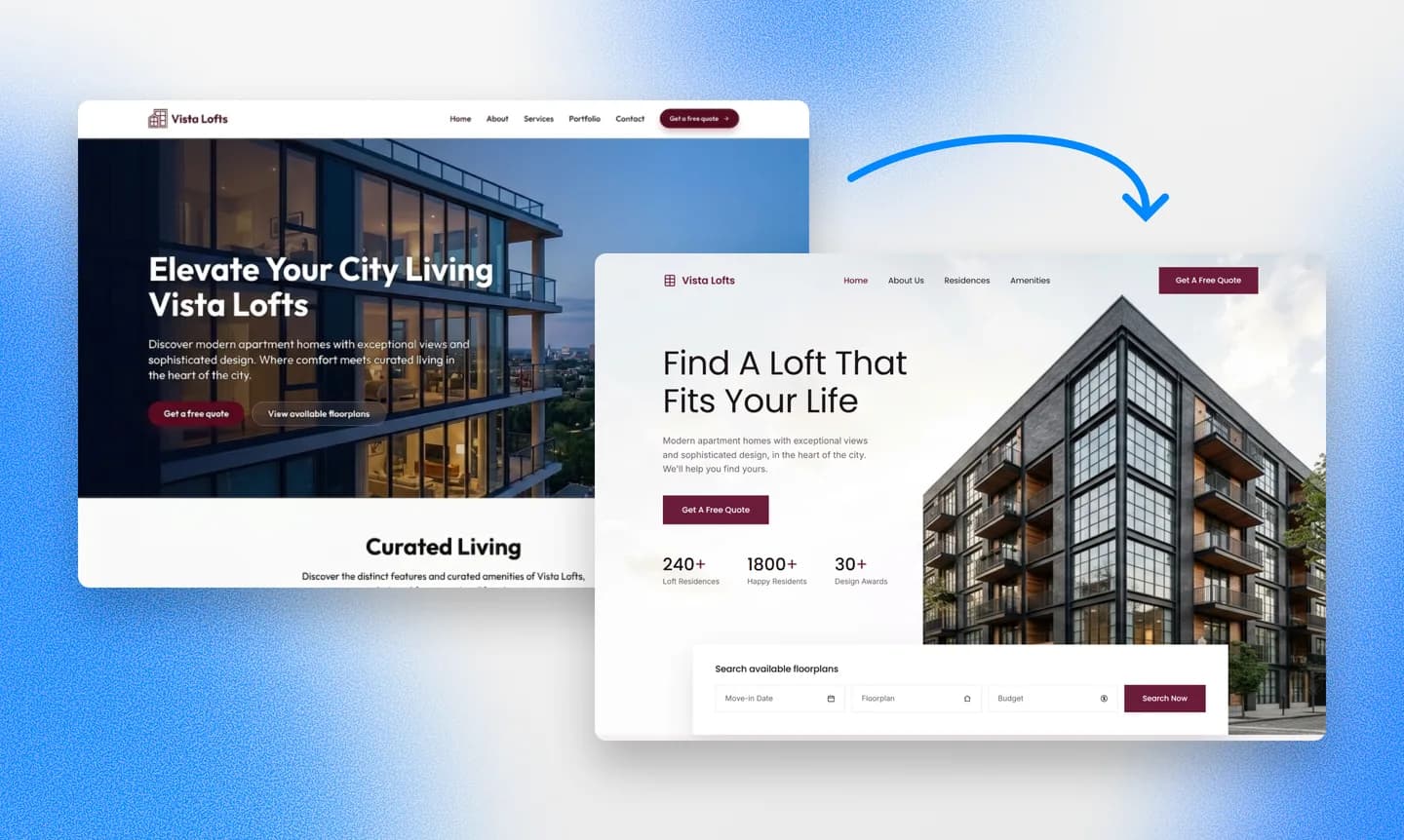
Repaint starts a conversation about your website and what you want to change. Then it uses your instructions and content to build the first version of your new website. You do not have to settle every decision upfront. Once Repaint builds the first version, you can keep shaping it through the chat.
Pick a Style
Repaint can take design direction from many different sources, including:
- Your current Elementor design
- Another website you like
- Style samples generated by Repaint
- Your content from Facebook, Instagram, or Google Business
- Files such as a PDF or PowerPoint
- A description of the style you want
Repaint can combine these sources while keeping your brand colors and logo, so the site still feels like your business.
We have a collection of website examples organized by industry if you don't already have another website in mind.
Review the Result
The first version of a small business site usually takes a few minutes to generate. A site with many pages or posts takes longer.
When the first version is ready, you can see how your existing Elementor content fits into the new layout. It is normal for some details to need adjustment, which happens through the chat in the next step.
Step 3: Make Adjustments
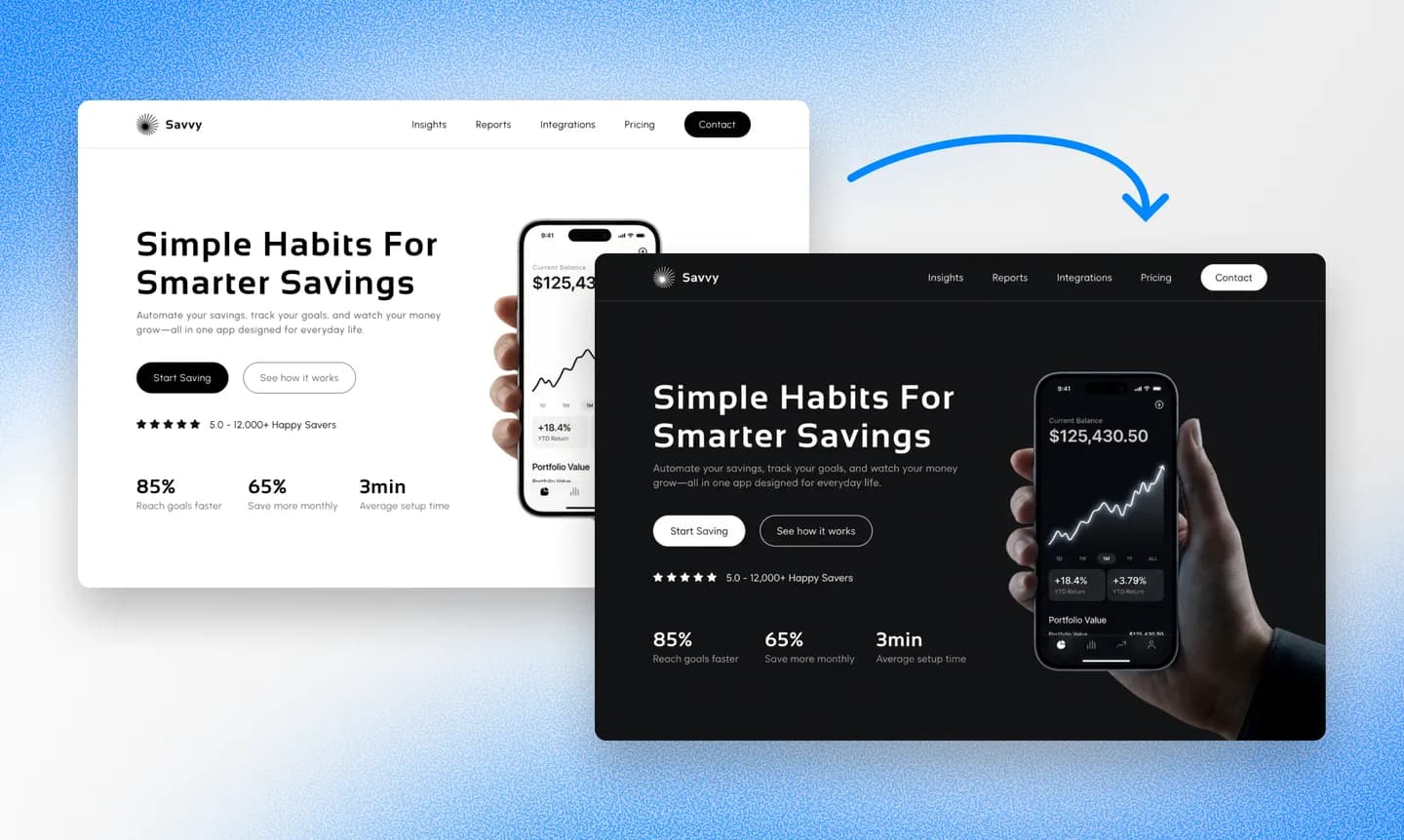
Most adjustments happen through the same conversation that created the site. You describe what should change and Repaint shows you the result. If it misunderstood, you can explain what should be different.
It helps to settle the overall structure and visual style first, because those larger choices affect everything that follows. Smaller details are easier to address once the foundation feels right. A final check on desktop and mobile can catch anything that did not adapt as expected.
Repaint can recreate what visitors see, but Elementor Pro and add-on settings do not transfer. It can replace an Elementor contact form with a new form that saves submissions. Third-party services can usually be reconnected by sharing their embed code or link in the chat.
Review SEO
Preserving URLs is more important than preserving Elementor's internal structure. Search rankings belong to individual page URLs, so changing a working URL while moving the site can cost the history that page has earned.
A useful final check is to compare the paths on the old and new sites. Repaint can recreate any that do not match. Page titles and descriptions also deserve attention if a WordPress SEO plugin controlled them. Our SEO guide for changing your website explains the full process.
Step 4: Publish

Until you publish, the new site is a private draft that only you can see. Click Publish in the top right corner and Repaint puts it online at a Repaint URL. It is a real, working website that you can open on your phone or share with other people for feedback.
After that, each time you publish, your latest changes go live at the same Repaint address. These updates only affect the new website. They never change your Elementor site. Both sites remain live at different addresses while you work. Visitors keep seeing the Elementor site on your main domain until you switch it to the new website.
Step 5: Connect Your Domain

The final step is pointing your domain to Repaint. Elementor can run as a WordPress plugin with separate hosting, or as an all-in-one service through Elementor Hosting. Elementor also sells domains, so your DNS settings may be managed by Elementor or an outside registrar. Either way, the domain can stay registered where it is. You only need to update the records that control where the website loads.
When you're ready to connect the domain, Repaint provides the exact DNS records and instructions for your provider. It can also walk you through the process step by step based on where your domain is registered. You can connect a custom domain during the free trial or on any paid plan, with current details on the pricing page.
The update usually takes effect within about 20 minutes, though it can occasionally take longer. Repaint can confirm when the new website is live on your domain. After the switch is working, you can cancel whichever service hosted the old Elementor site. That may be Elementor Hosting or a separate provider. If the domain is registered through Elementor, keep the domain renewal active. The domain registration is separate from website hosting, so you do not need to keep paying for Elementor Hosting or transfer the domain away from Elementor.
Conclusion
Elementor lets you build a WordPress website without writing code, but every change is manual and the site still needs maintenance. Repaint imports your existing content, redesigns the website around it, and lets you make future changes through chat. Your Elementor site stays live until you choose to switch the domain.
FAQ
How long does it take to migrate from Elementor?
Importing the content and generating the first version usually takes 3-10 minutes. The rest depends on the size of the Elementor site and how much you want to change. Most small business websites can be finished the same day.
Can Repaint import sites from Elementor Hosting and other WordPress hosts?
Yes. Repaint works from the public Elementor website, so it can import content from Elementor Hosting or a self-hosted WordPress site. The new website runs on Repaint rather than WordPress.
Does Repaint make WordPress websites?
No. Repaint is an alternative to WordPress, not a tool for generating WordPress themes. It hosts the new website and lets you edit it through chat while keeping your existing domain and content. Unless your site depends on a specific WordPress plugin, you do not need WordPress underneath it.
Can I keep the current Elementor design?
Yes. Repaint can use the live Elementor site as a visual reference and recreate the same general look. The first version will not be a pixel-perfect copy, but any differences can be refined through chat. You can also ask Repaint for a completely new design.
Do Elementor widgets and add-ons transfer?
Elementor widgets are the building blocks used to make a page, while add-ons are plugins that provide extra widgets or integrations. Repaint recreates what visitors see, so the visible content and design usually carry over. Behavior that only exists inside Elementor, such as form delivery rules or popup triggers, needs to be set up again. Outside services can usually be reconnected with an embed code or link.
What happens to my Elementor Pro forms?
Repaint can replace an Elementor contact form with a new form that saves submissions. A form connected to a CRM or another outside service will need that connection set up again. Most third-party form tools offer an embed code that you can share with Repaint in the chat.
Can I migrate an Elementor blog?
Yes. For a large blog, Repaint may start with a few posts to establish the article and archive layouts. It can bring over the rest in batches once those layouts are working. The new post URLs should match the old ones to protect their search history.
Can I migrate an Elementor WooCommerce site?
Yes. Repaint can rebuild your storefront and provide checkout, payments, order management, and inventory without WooCommerce. You can give it your product information and explain how you want the store to work. See our online store builder for more about selling through Repaint.
Can I cancel Elementor Hosting and keep my domain?
Yes. If the domain is registered through Elementor, it can remain there after the website moves. Its DNS records change so it points to Repaint, while the domain renewal stays active. Elementor Hosting can be canceled after the new website is working.
What happens to my existing Elementor site?
Nothing while you build. Repaint creates a separate website and never changes the Elementor site. The old site stays live until the domain points somewhere else. If you decide not to switch, it can stay exactly where it is.
How much does it cost to switch from Elementor to Repaint?
You can try Repaint free for 14 days, including building, editing, publishing, and connecting a custom domain. Paid plans start at $25 per month and include hosting and a weekly AI usage allowance.
When the trial ends, your workspace pauses until you start a paid plan. Your work stays saved, and you can reactivate it anytime. See our pricing page for details.
What if the AI gets something wrong?
Repaint saves a new version of the website with every change. You can ask it to go back or restore an earlier version from the version history. Nothing you try is permanent.
Will I still need to maintain WordPress or Elementor?
No. The new website runs on Repaint rather than WordPress, so it does not use the old Elementor installation. Repaint manages the hosting and software updates for you. If you use Elementor on other websites, those sites will still need their existing subscriptions and maintenance.


