
Best WordPress Alternatives in 2026
A breakdown of the best WordPress alternatives in 2026, including how each one works, how well it brings over your existing site, and how to pick the right one.

Introduction
WordPress is still the most popular way to build a website, and for good reason. It's been around for over twenty years, it's flexible, and there's a plugin for almost anything. But running a WordPress site takes ongoing work, and a lot of small business owners would rather spend that time on their business.
There are more good alternatives now than ever. Hosted website builders take care of hosting and updates for you, and AI builders can do most of the building too. They differ a lot in what they're like to use day to day, and in how much of your existing site they can bring with you. In this post, I'll go through the best WordPress alternatives in 2026 and how to pick the right one.
Types of WordPress Alternatives
The biggest difference between these alternatives is what happens under the hood when you build, which splits them into two groups.
AI app builders
Repaint, Base44, and Lovable are built around a chat, and the AI writes your site's code itself. That means it can build custom features, so when you need something you'd normally add with a plugin, you ask for it instead.
Website builders
Squarespace, Wix, Framer, Ghost, Webflow, Shopify, and Carrd host your site for you, so there are no updates or security patches to manage. Your site is assembled from each platform's own building blocks, whether you do it by hand or with their AI tools, so you're limited to the features each platform and its app store offer.
Our Picks
Prices are the lowest paid plan, billed annually where that's an option.
| Tool | Best For | Free Option | Price |
|---|---|---|---|
 Repaint | Best overall. It's far easier to use than WordPress, and it brings over your existing site more completely than anything else here. | 14-day trial | $25/mo |
 Squarespace | Polished small business sites. Its templates and editor make good-looking sites easy. | 14-day trial | $19/mo |
 Wix | An all-in-one website builder. It has built-in stores, booking, and a large app marketplace. | Free plan | $17/mo |
 Framer | Design-focused sites. Its AI agent can rebuild your WordPress pages and blog. | Free plan | $10/mo |
 Ghost | Blogs and newsletters. It's made for publishing, with newsletters built in. | 14-day trial | $15/mo |
 Webflow | Designers and agencies. It's the most powerful visual builder, with a strong CMS. | Free plan | $15/mo |
 Shopify | A standard online store. Its store tools are the most complete of any platform. | Free trial | $29/mo |
 Base44 | Turning a WordPress site into an app. Its WordPress connector reads your posts and pages into a database. | Free plan | $16/mo |
 Lovable | Custom web apps. It builds almost anything you describe, with code access when you want it. | Free plan | $21/mo |
 Carrd | A simple one-page site. It's fast and costs a few dollars a year. | Free plan | $19/yr |
AI App Builders
With an AI app builder, you build and change your whole site by chatting, and the AI writes everything to fit what you ask for. This is the group I'd recommend for most people leaving WordPress, since there's almost nothing to learn and you can build far more than a website builder allows.
All three can start from your WordPress site's URL, but that means different things. Some bring over your actual content to keep editing, while others only copy how your pages look. The other main difference is how much technical detail each one shows you.
Repaint

How it works
Repaint is an AI builder for business websites and apps. Using it feels a lot like using ChatGPT. You describe what you need, and Repaint plans it with you before building. To move from WordPress, you paste your site's URL, and Repaint rebuilds it close to pixel for pixel, with your real pages, posts, and images.
Review
Repaint is easier than WordPress in almost every way. You describe what you want and the AI does the work, so there's nothing to learn. When you need a new feature, you ask for it instead of hunting for a plugin, and Repaint builds it to fit how your business works. Booking, payments, and private dashboards for running your business are built in too.
Repaint also has the strongest WordPress import of any alternative here. It brings over your whole site, including your blog posts, menus, and forms, with a design that looks nearly identical. Your pages keep their original URLs, so old links and search rankings carry over without any redirects. Once it's moved, you can keep the site as it is or ask Repaint to redesign it.
Key features
- Imports your WordPress site from its URL
- Keeps your original page and post URLs
- Features built by asking, instead of plugins
- Payments, bookings, memberships, and customer accounts built in
- Hosting, security, and updates handled for you
Base44
How it works
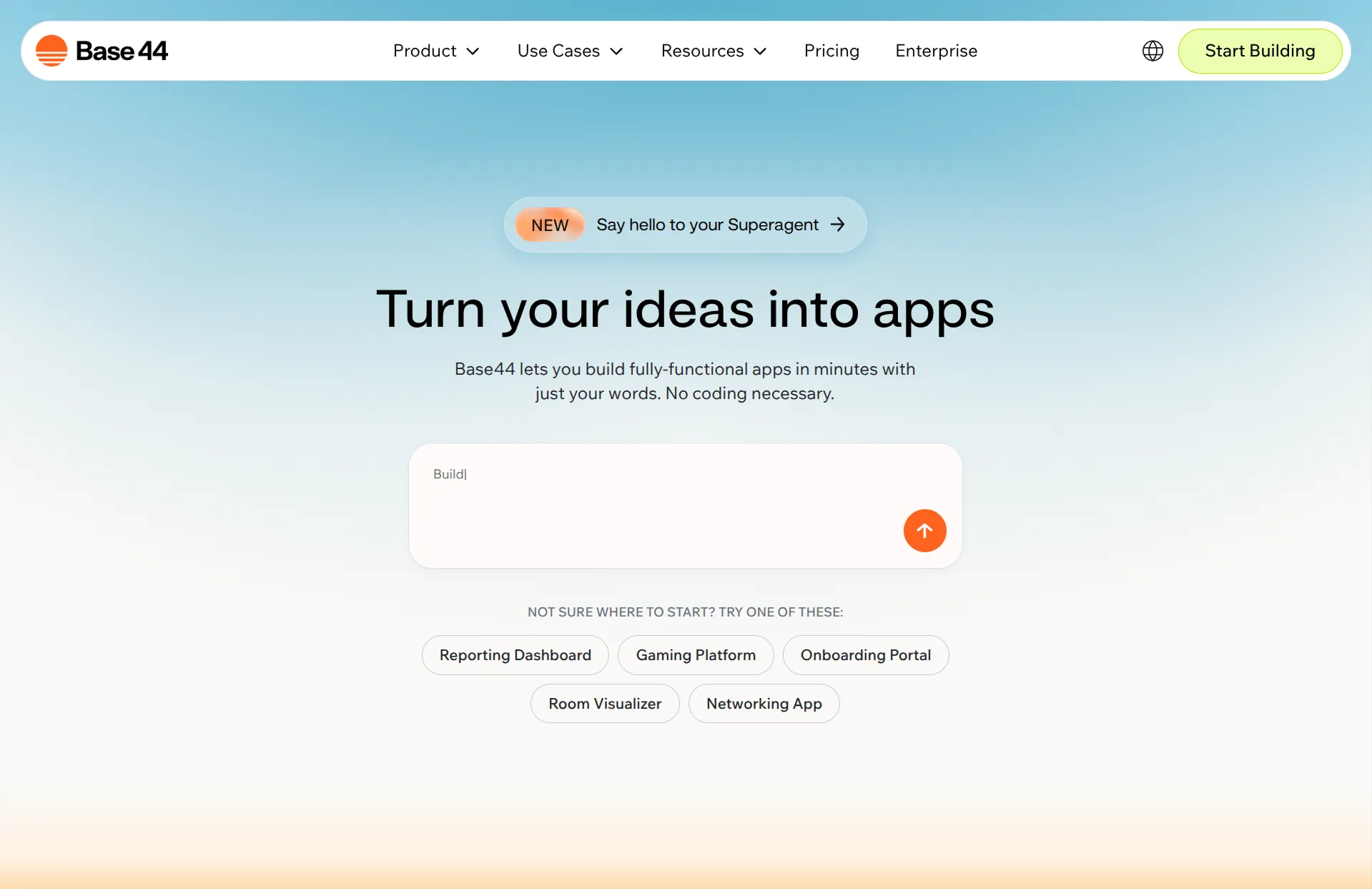
Base44 is an AI app builder owned by Wix. You build by chatting, and it hosts your app with a built-in database and logins. It has two ways to bring over a site. Its WordPress connector reads your posts, pages, and categories into its database, and "Start from URL" recreates the look of a page.
Review
Base44 is a capable builder for custom apps, with logins and a database built in, and you can change anything by chatting. It shows more technical detail as it works than Repaint does, like the names of files and functions it's editing, but you can mostly ignore it.
Its WordPress connector does more than most importers. It brings over your pages and posts as content you can keep editing, along with your categories. The catch is that it can swap your real photos for AI-generated ones, and your post URLs change with no redirects. Its "Start from URL" option is much weaker, since it only reads a single page and fills in the rest with placeholder content.
Key features
- WordPress connector that reads posts and pages into a database
- Full-stack apps built from a description
- Built-in database and logins
- Owned by Wix
Lovable
How it works
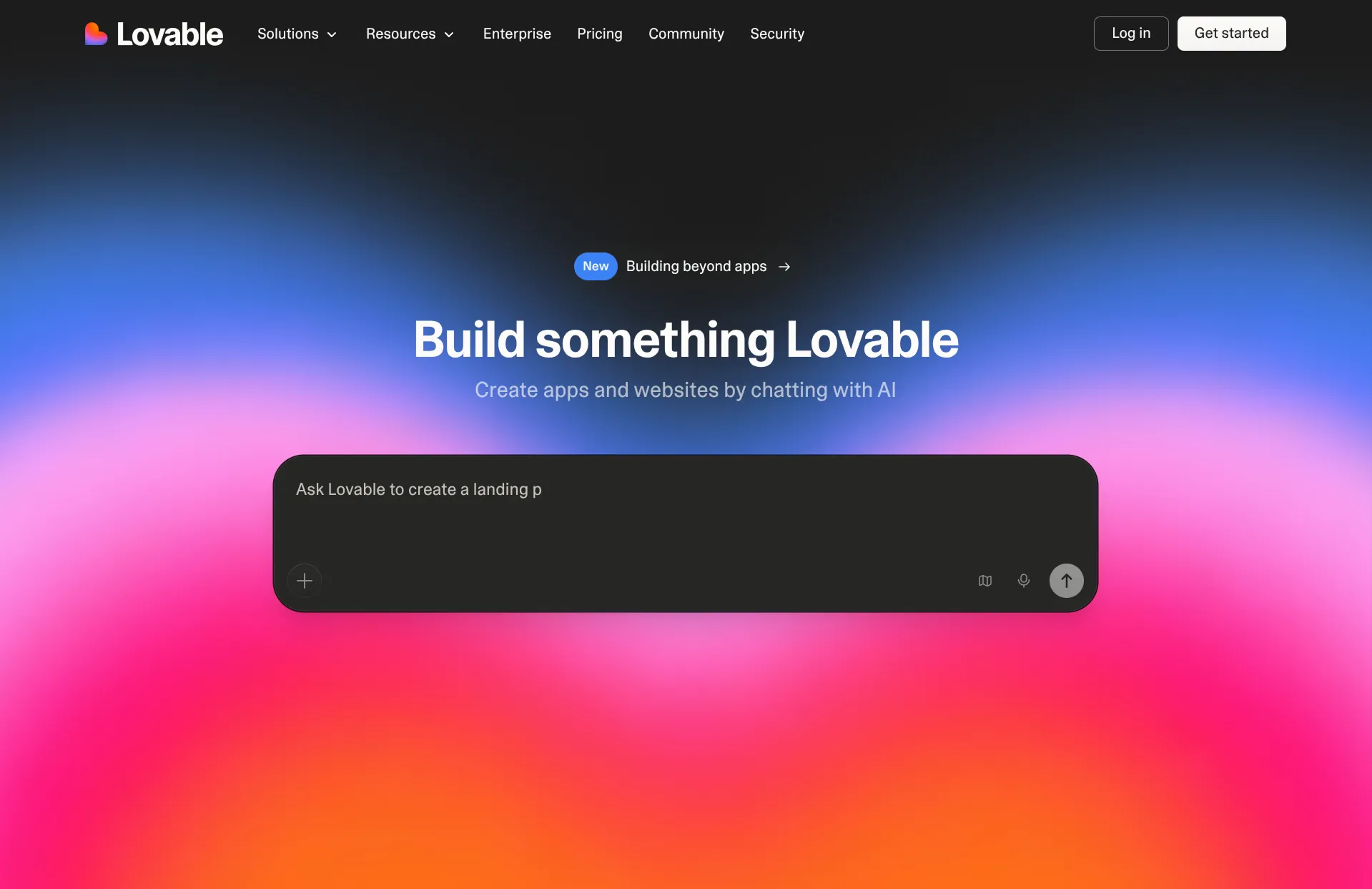
Lovable builds full web apps from a description, and you make changes by chatting. Its website import rebuilds pages from a public URL by copying how they look.
Review
Lovable can build almost any custom app you describe, and it gives you code access and GitHub sync when you want them. That makes it a strong option if you're comfortable with a little technical setup.
It's not built for moving a WordPress site, though. Its import copies the look of each page, but your blog posts don't come over as posts you can manage. They're written into the page as fixed content, so individual post links stop working, and forms don't send anywhere until you build that part.
Key features
- Custom web apps built from a description
- Website import that copies the look of each page
- Code view and GitHub sync
- Built-in database and logins through Lovable Cloud
Website Builders
Website builders host your site and handle updates and security for you, which removes most of the maintenance that comes with WordPress. Your site is assembled from each platform's templates and building blocks, and you add features from its own tools and app store.
They make sense if you like editing by hand and your needs fit what the platform offers. Moving from WordPress is harder with these tools, since most of them only import your blog posts.
Squarespace
How it works
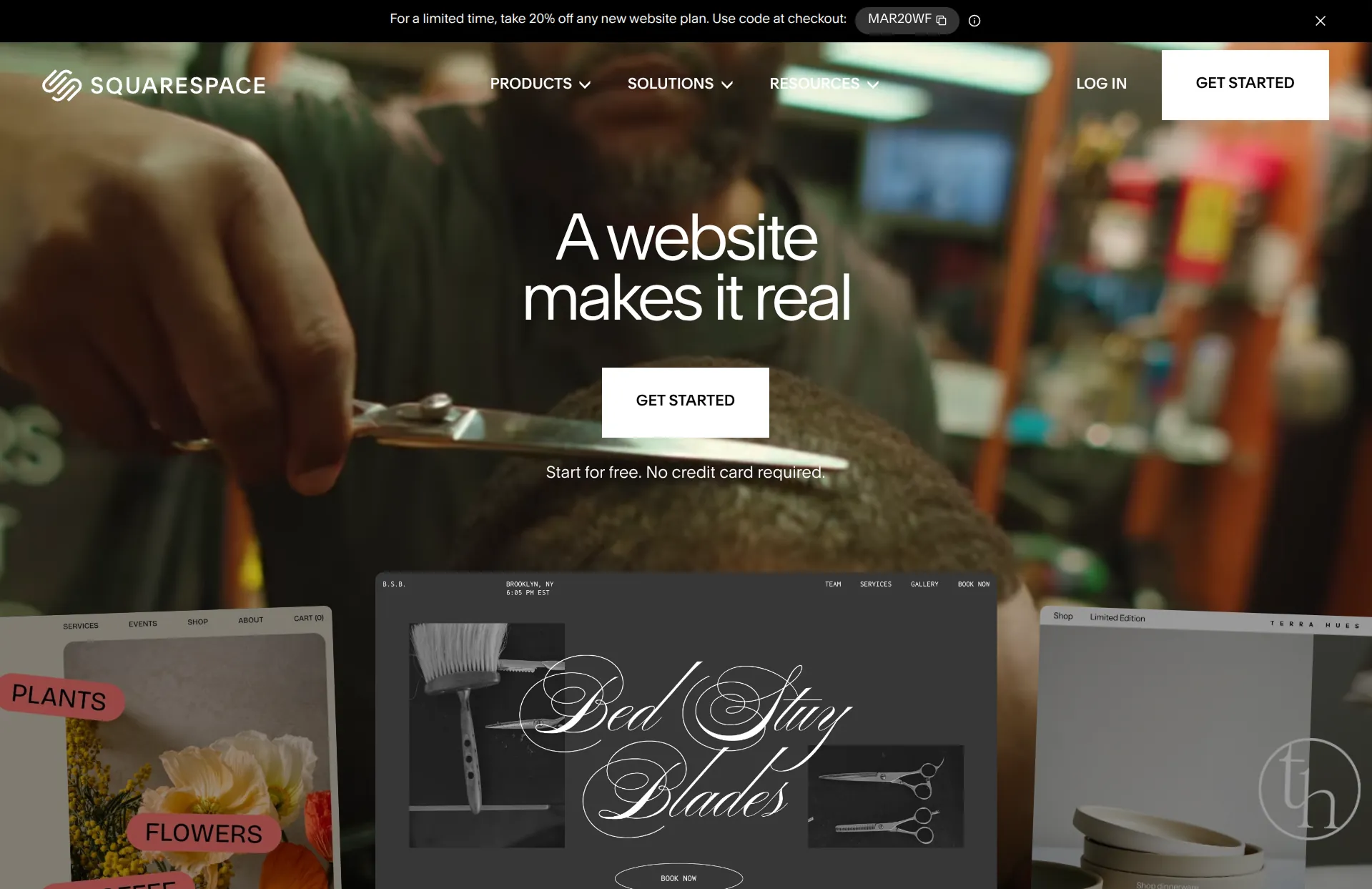
Squarespace is a website builder known for polished templates and an easy drag-and-drop editor. Its WordPress import takes the export file from your WordPress dashboard.
Review
Squarespace is one of the easiest website builders to use, and its templates make it hard to build an ugly site. It has built-in stores, booking, and memberships. The tradeoff is that it's limiting. If you want something your template or Squarespace's features don't support, you're stuck.
Its WordPress import handles blog posts well, with their dates, categories, and images. Pages are a different story. They arrive as one big block of plain HTML, and your menu, forms, and design don't come over at all. Post URLs also move under a new path, so you'll need to set up redirects by hand to keep old links working.
Key features
- Polished templates and an intuitive editor
- WordPress import for blog posts
- Built-in stores, booking, and memberships
- Hosting and security handled for you
Wix
How it works
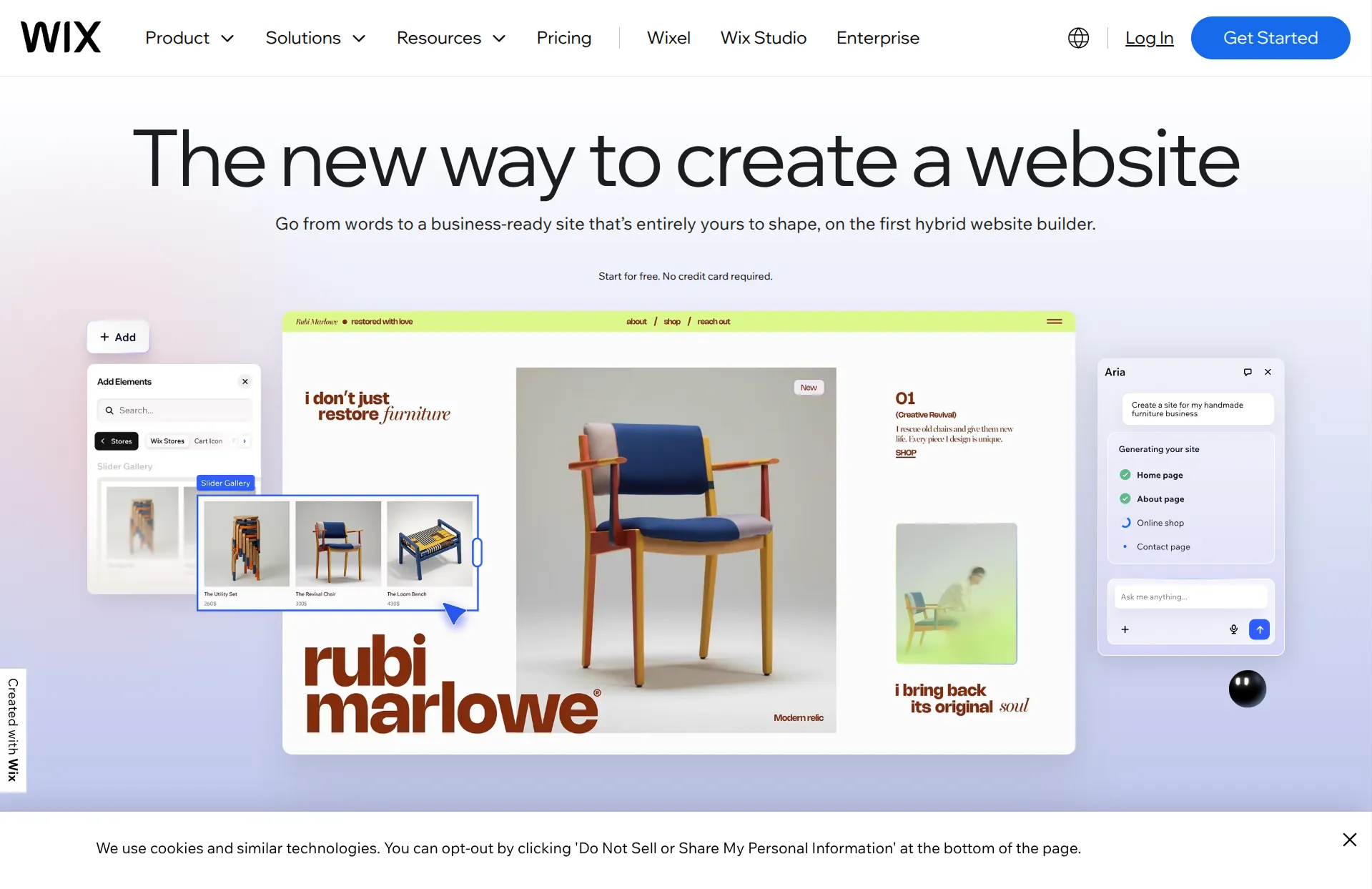
Wix is a drag-and-drop website builder with an AI chat for edits and a large app marketplace. It can import WordPress blog posts, and its "Create from URL" tool builds a new Wix site based on an existing home page.
Review
Wix covers a lot of ground, with built-in stores, booking, and memberships, plus an app for almost everything else. Its AI chat works on top of the same editor, so it can only make the kinds of changes the editor supports.
Moving from WordPress is mostly manual. Its blog importer is fast and brings over your posts with their categories, but not their featured images, and it doesn't touch your pages. "Create from URL" only reads your home page, then generates a new design around it, filling in details like menu items on its own. Post URLs change, so you'll need to add redirects by hand.
Key features
- Drag-and-drop editor with AI chat
- Large app marketplace
- Built-in stores, booking, and memberships
- Blog post import from WordPress
Framer
How it works
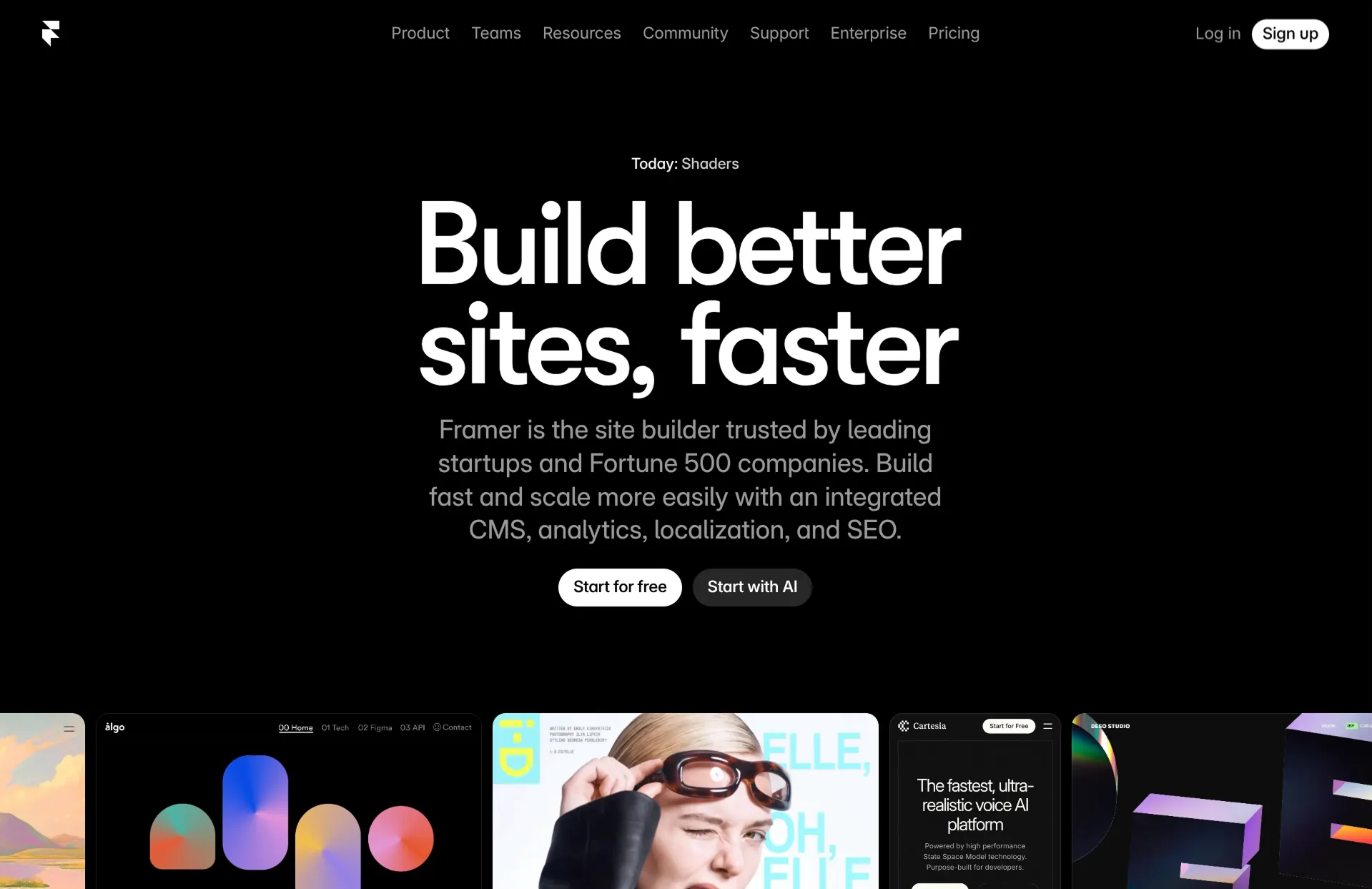
Framer is a design tool for building websites, with an AI agent that can build and edit pages. The agent can import your current website from its URL, including your blog.
Review
Framer makes beautiful, fast sites with smooth animations, and it's popular with designers. It has a steep learning curve, though, since you control the layout and style of every element by hand.
Its AI import is the strongest of the website builders. It rebuilds your pages and brings your blog posts into Framer's CMS, along with your menu, in just a few minutes. It doesn't keep post categories or rebuild forms, and it can leave some WordPress text behind to clean up. It also sets up redirects for your old post URLs, but redirects only work on Framer's Pro plan.
Key features
- AI agent that can import your current website
- Visual editor with full design control
- Smooth animations and interactions
- Built-in CMS for blogs
Ghost

How it works
Ghost is a publishing platform for blogs and newsletters, with member signups and paid subscriptions. Its WordPress importer takes the export file from your WordPress dashboard.
Review
Ghost is built for writers and publishers, and it's a pleasure to write in. Newsletters and member signups come with every plan, and paid subscriptions start on its Publisher plan. It's not meant for business sites that need things like booking or a store.
Its WordPress import brings over your posts, images, and categories well, turning categories into tags. Pages come over too, but some need cleanup, and your menu, forms, and design don't come over. Post URLs lose their dates, so old links break unless you write redirects or change Ghost's routing settings.
Key features
- Clean writing and publishing experience
- Newsletters and member signups built in
- WordPress import for posts and pages
- Hosting handled for you on Ghost(Pro)
Webflow
How it works
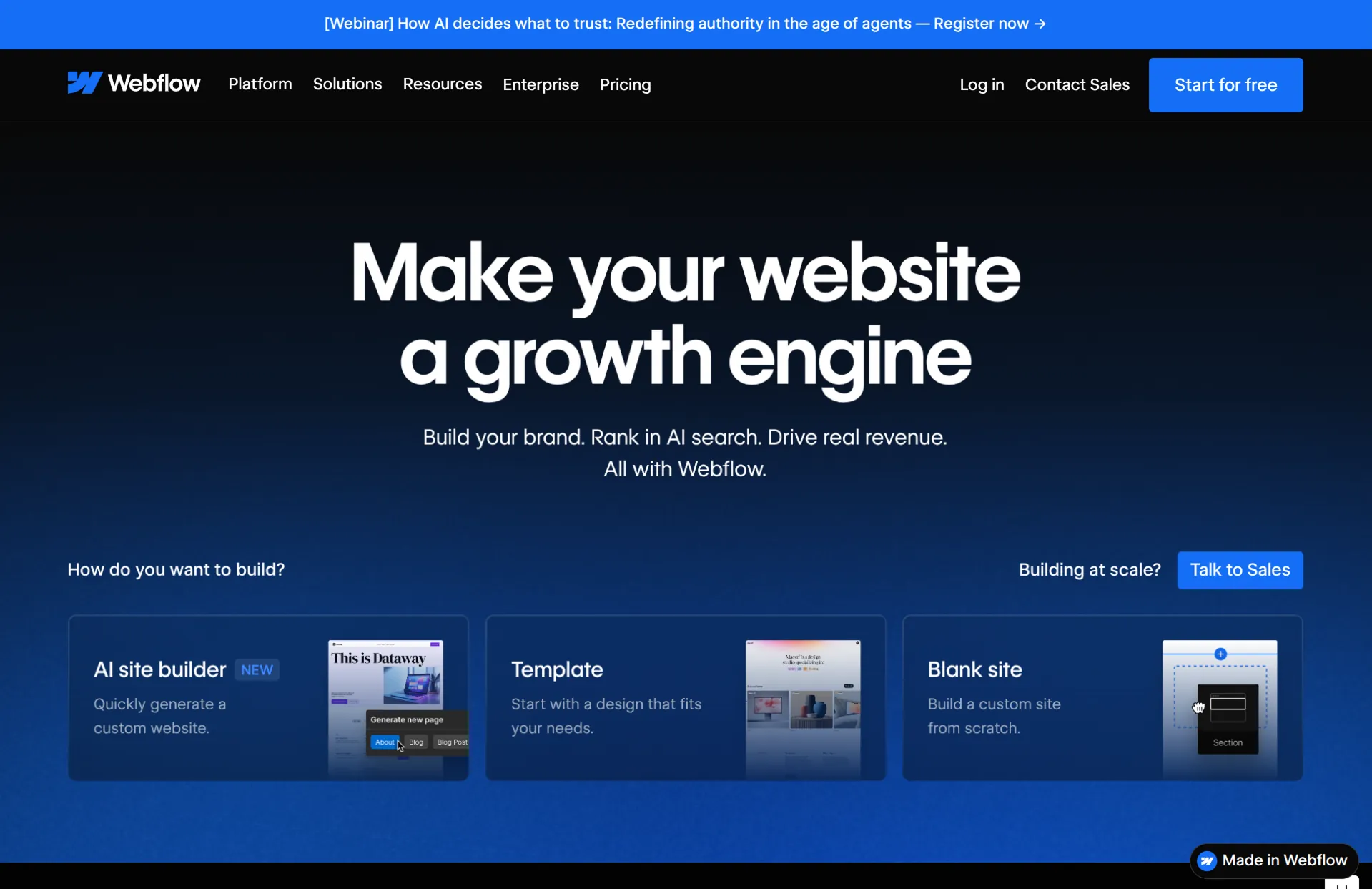
Webflow is the most powerful visual website builder, with a CMS for blogs and other content. It doesn't have a built-in WordPress importer, so posts come over through a spreadsheet you upload to its CMS.
Review
Webflow can build almost anything a developer could, without code, and its sites look great. It's also the hardest builder here to learn. The interface is dense and the concepts are technical, which makes it a better fit for designers and agencies than for business owners.
Moving from WordPress takes real work. Your blog posts come over through a spreadsheet you have to prepare, and every page is rebuilt by hand. Its AI site builder only works from a written description, so it can't read your existing site. Redirects and a full CMS also need paid plans.
Key features
- Complete visual control over layout and styling
- Powerful CMS for blogs and dynamic content
- Advanced animations and interactions
- Large template marketplace
Shopify

How it works
Shopify is an ecommerce platform with an AI store builder and an AI assistant called Sidekick. It doesn't have a built-in WordPress importer, so blog posts come over through third-party apps.
Review
If you're running a standard online store, Shopify is still a strong choice. It has the most complete tools for products, inventory, shipping, and checkout, and it sells across many channels.
It's built around stores, though, so it's not a natural home for a content-heavy WordPress site. Blog posts come over through a third-party app, and pages, menus, and forms have to be rebuilt by hand. Post URLs move under Shopify's own paths, so you'll want redirects.
Key features
- Complete ecommerce tools
- Inventory, shipping, and order management
- Thousands of apps and integrations
- Sells online, on social, and in person
Carrd
How it works
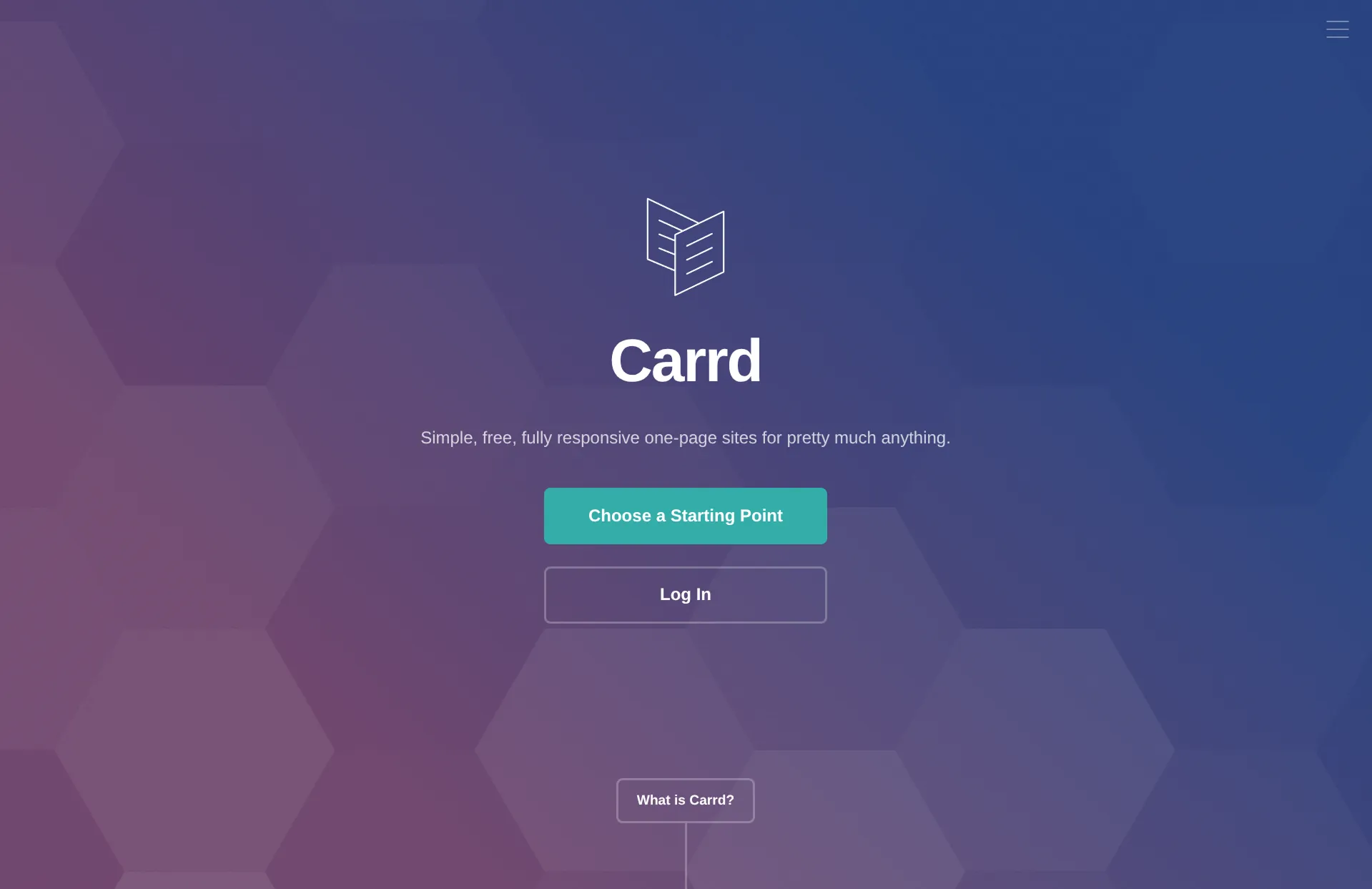
Carrd builds simple single-page websites. It doesn't import from WordPress.
Review
Carrd is fast, cheap, and easy, and it's great for a landing page, a link-in-bio page, or a simple project page. It only makes one-page sites, so it's not a replacement for a WordPress site with a blog or several pages.
Key features
- Single-page website builder
- Very simple editor
- Costs a few dollars a year
- Good for landing pages and link-in-bio
Conclusion
Every alternative here takes hosting and maintenance off your plate. The bigger differences are in how you build, and how much of your current site comes with you. Website builders give you their own building blocks to work with, while AI app builders build whatever you describe. Most alternatives only bring over your blog posts, so moving is often the hardest part.
Repaint is the best place to start. It's far easier to use than WordPress, and when you need a feature, you ask for it instead of hunting for a plugin. It also brings over your whole site with its original URLs intact. If you'd rather build by hand, Squarespace and Wix are the easiest website builders, Framer is the strongest pick for design, and Ghost is a great fit for blogs and newsletters.
Most of these tools have a free plan or trial, so it's easy to try a couple before you commit.
FAQ
What is the best alternative to WordPress?
Repaint is the best WordPress alternative for most small businesses. It's far easier to use, and when you need a feature, you ask for it instead of installing a plugin. It also brings over your existing WordPress site with its original URLs intact. If you'd rather build by hand, Squarespace and Wix are the easiest website builders.
Can I move my WordPress site without rebuilding it?
Usually only part of it. Most website builders import your blog posts from WordPress's export file, and you rebuild your pages, menus, and forms by hand. A few AI tools, like Repaint and Framer's AI agent, can rebuild a whole site from its URL, though how much they bring over varies.
Will I lose my SEO if I move off WordPress?
Not if your old URLs keep working. Most alternatives change your post URLs when you move, so you'll need to redirect each old address to its new page. If your new platform keeps your original URLs, there's nothing to redirect.
What's the easiest WordPress alternative for non-technical people?
AI app builders like Repaint are usually the easiest, since you build and change everything by chatting. Among website builders, Squarespace is the easiest to pick up, and Webflow is the hardest.
What replaces WordPress plugins?
On website builders, features come from the platform itself and its app store. On AI app builders, you describe the feature you need and the AI builds it, which is often faster than finding and setting up a plugin.


