
How to Turn AI-Generated Code Into a Website
Learn how to turn AI-generated code into a real website using a new AI tool called Repaint. A step-by-step guide to getting your code online and keeping it editable, without managing developer tools.

Introduction
A lot of people are using AI to make websites. Tools like ChatGPT, Claude, and Gemini will happily generate a single code file with a preview of the site you described. But once you have that code, the next step isn't obvious. You still need to get it hosted somewhere, connect a domain, make it work on mobile, and figure out how to keep editing it later.
Traditional developer tools like GitHub and Netlify can host the file online, but every edit requires managing code files, deployments, and technical details. Most people would rather not deal with all that, especially since AI is the only reason they got the code in the first place.
In this guide, I'll show you how to turn AI-generated code into a real, published website using a new AI tool called Repaint. It lets you start from your code, publish the site, and make edits by chatting with AI.
Why Publishing AI-Generated Code Is Hard
AI makes it easier than ever to get a working code file for a website. The problem is, AI chatbots like ChatGPT, Claude, and Gemini aren't built to host that code as a real website. They give you the file and leave the rest to you. From there, the only real path forward is a developer tool like GitHub, Netlify, or Vercel. Those tools work, but they're built for developers.
Developer tools are nice because they can directly run the code AI generates. The downside is that every change requires editing specific code files. For people who aren't coders, this means constantly feeding files in and out of their deployed code just to make simple edits with AI.
That's why you should use an AI website builder like Repaint. It gives you the flexibility of running custom code and the convenience of editing and publishing in one place.
What is Repaint?
Repaint is an AI platform for creating websites. Everything happens in a chat. You describe what you want, review the result, and keep iterating until the site looks right.
But Repaint is a full website platform, not just a place to generate code. That means it handles the parts of running a website that an AI chatbot does not:
- It publishes your site so people can actually visit it online.
- It lets you connect a custom domain, so the site can live at your real URL.
- It keeps the site editable with AI, so you can make changes later.
- It helps manage SEO details like page titles, descriptions, and site structure.
- It can create new pages when your site needs to grow.
That is the difference between owning a code file and having a real place to manage your site over time.
Step 1: Import Your Code
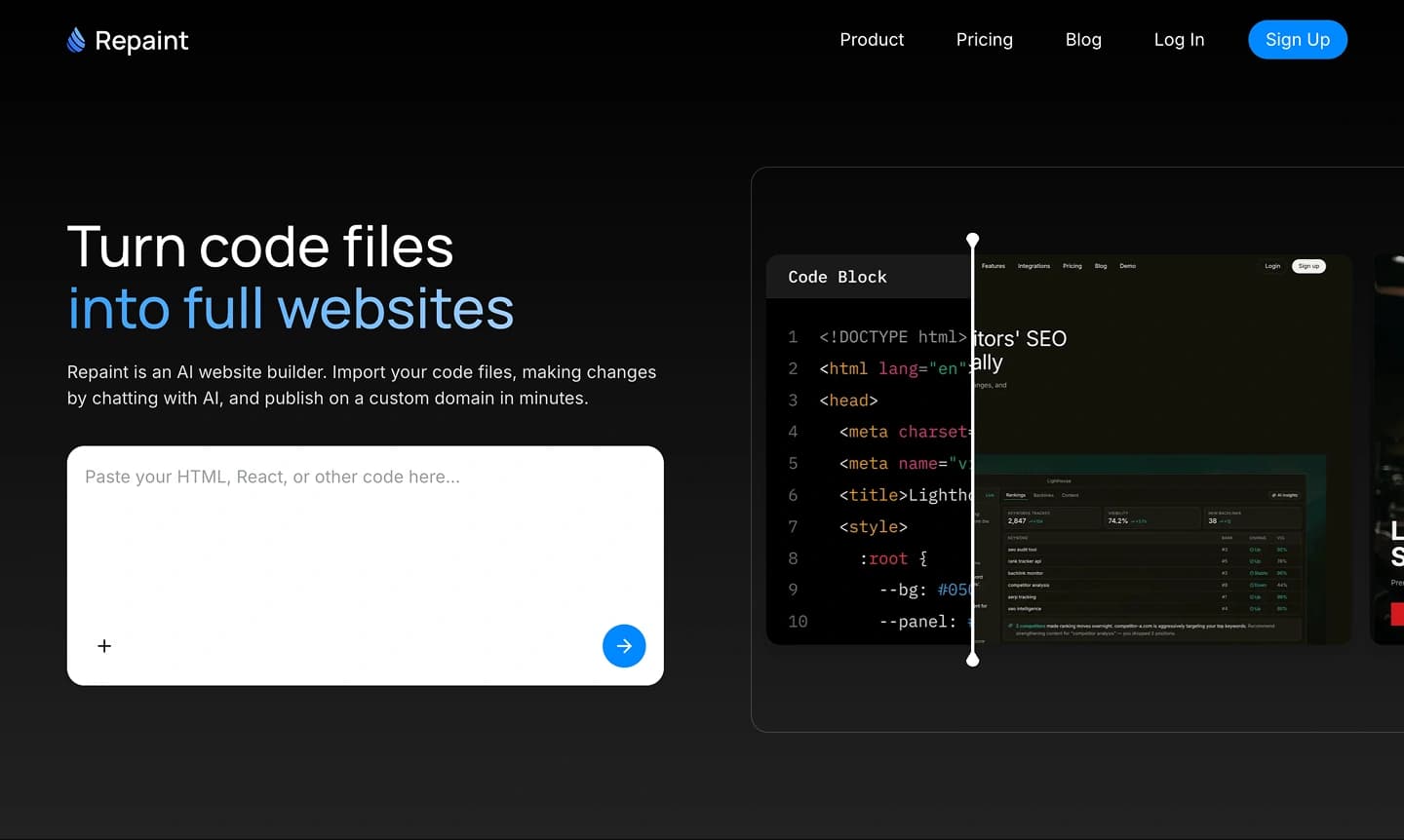
When a chatbot like ChatGPT, Claude, or Gemini makes a website for you, the result is usually a single code file, either HTML or React depending on what you asked for. All of these chatbots let you copy the file out of their UI.
To get started, copy the code from wherever it was generated. Then head to Repaint and import your code to start building. Repaint will use it to create a full website that you can publish and keep editing.
If you have a choice, I recommend asking for React. It is closer to the format Repaint uses, so there is less chance that small design details will be lost in translation. HTML works too, though any issues can be fixed later by chatting with Repaint.
If your code came from a specific chatbot, you can also follow one of the guides tailored to it: ChatGPT, Claude, or Gemini.
Step 2: Plan What Repaint Should Build

After you paste in your code, Repaint will ask a few questions before it builds the website. This gives you a chance to decide if you want to use the original exactly, use it as loose inspiration, or turn it into a larger site with more pages.
Plan the Content
Sites made from a single code file are usually one-pagers, where the links scroll to sections instead of opening new pages. But most businesses need more than a single page. So if you have a one-page site, you should consider having Repaint build it as multiple pages.
You can also use this moment to add more content. A single code file rarely covers a full website with things like blog posts. When you import the code into Repaint, you can increase the scope to include everything you want.
Any new pages will match the style you already have.
Plan the Style
By default, Repaint will copy the style from your original. That means it will preserve the same look: colors, layout, typography, and spacing.
But you don't have to keep the style. If you're not happy with it, you can ask Repaint to redesign your website. Repaint can:
- Recreate the original as closely as possible
- Match the style of another website you like
- Create a custom style for your content
- Choose for you
Don't stress about it too much. If you don't like what it makes, you can ask it to make new versions later.
Review the Plan
Before generating anything, Repaint writes out exactly what it's going to build: which pages, what content, and what style. Look it over and make any last changes. It's a lot faster to fix the plan than to regenerate the whole site.
Once you confirm, Repaint will build your new website!
Step 3: Generate Your Website
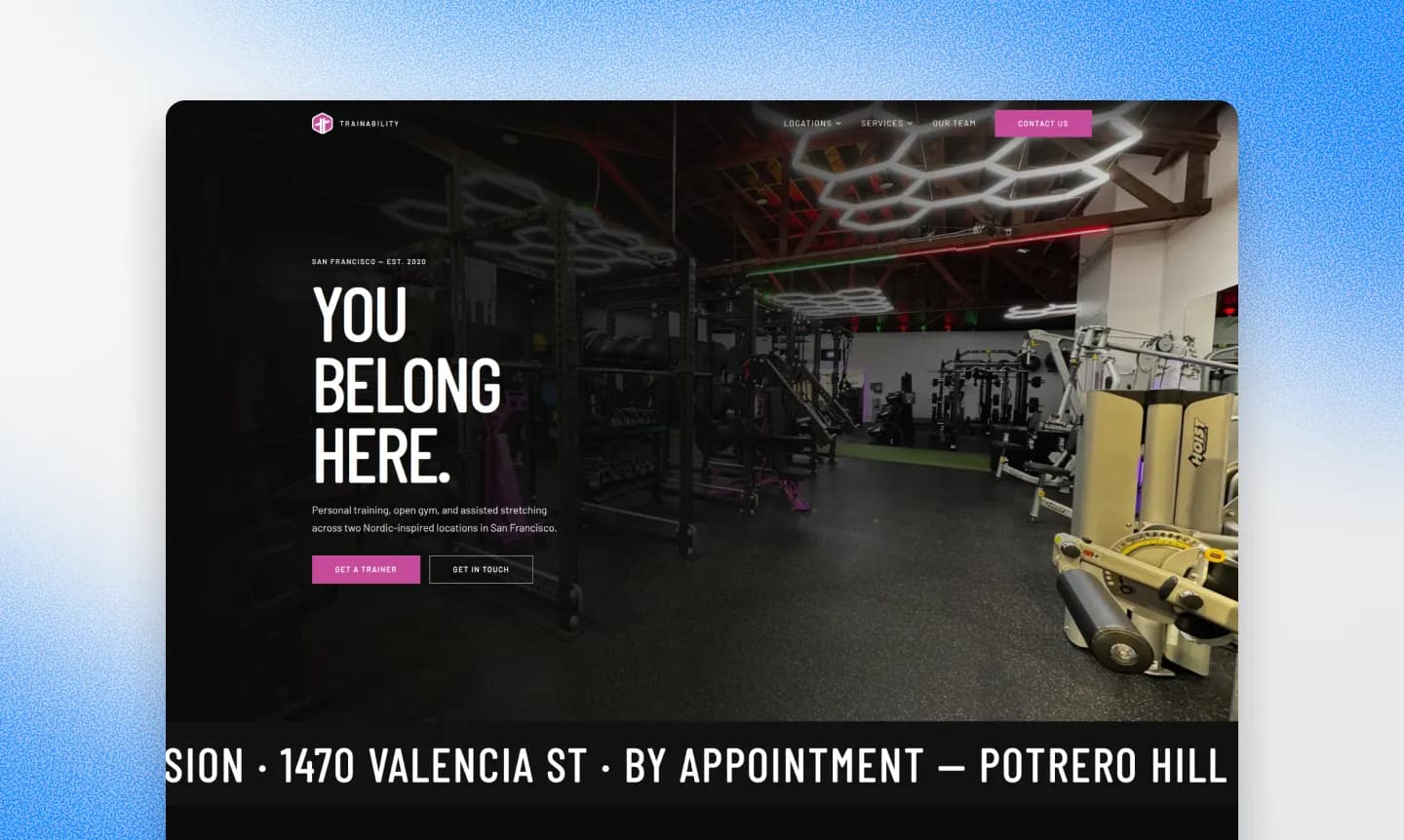
Once you confirm the plan, Repaint starts building your site. You'll see progress messages as it works through each page. A simple homepage might take a minute or two. A larger website with more pages can take longer.
Repaint is not just hosting the code you pasted. It uses the original as source material, then builds the site described in your plan. If you asked for an exact recreation, it will try to match the original closely. If you asked for more pages or a different style, it will use the original as a starting point instead.
Sometimes details can get lost in translation during generation. It happens more often if your original file is HTML, since React is closer to what Repaint uses. If any important details are lost, you can fix them in the next step.
Step 4: Edit Your Website with AI

Once Repaint generates the first version, you'll see it on the right side of your screen. Now you can make changes the same way you would in a chatbot. You type what you want changed, Repaint updates the site, and then you review the result.
For example, you can ask Repaint to:
- Add a new page
- Change the colors or fonts
- Add a contact form
- Generate images
- Rewrite the text
You can keep making changes until the site feels ready to publish.
Step 5: Publish Your Website
When the site is ready, click the Publish button. Repaint will put the site online and give you a live URL you can share with anyone. It will look something like this: https://xxxxxx-xxxxxx-xxxxxx.sites.repaint.com
This is the point where your work becomes a real website on the internet. You can open it on your phone, send it to someone, or test it in a real browser.
You also do not need to export code or deploy files somewhere else. From now on, Repaint is where you edit and publish the site. If you want to make changes later, you can ask Repaint to update the website, then publish the new version with the same button.
Step 6: Connect Your Domain

When you're ready to use your own URL, just tell Repaint to connect your domain, and it will give you the DNS records to add. This requires a paid plan. You can see pricing details here.
Your domain is managed on a platform outside of Repaint. It is registered with a domain provider like GoDaddy, Namecheap, or Cloudflare. You do not need to move it anywhere. You just update the settings at your domain provider so the domain points to your Repaint site.
If you've never done this before, don't worry. Ask Repaint to walk you through it. It'll tell you exactly what to do, step by step.
The change can take a few hours to take effect. Once Repaint shows your domain as verified, your website is live at your own domain.
Conclusion
AI makes it easy to generate a first version of a website, but getting that code online and maintaining it is still hard. Repaint gives you a way to turn that code into a real website you can publish, connect to a domain, and keep editing with AI. Repaint makes it easier than ever to turn AI-generated code into a published site.
FAQ
Does it matter which AI tool I used to generate the code?
Not really. As long as you have the code file, Repaint can use it. The most common tools people import from are ChatGPT, Claude, and Gemini. If you used one of those specifically, there's a guide tailored to it: ChatGPT, Claude, and Gemini.
Does it matter if the code is HTML or React?
No, but React tends to translate slightly better. Repaint can handle either. If you have a choice when generating the code, ask for React. If you already have an HTML file, that works too, and you can fix any small issues by chatting with Repaint after the import.
How long does it take to turn AI-generated code into a website with Repaint?
If your code is already done, it should only take a few minutes. Sharing your code, planning the site, and generating the website usually takes 2-5 minutes. After that, time-to-publish depends on how many adjustments you make.
How much does it cost to publish with Repaint?
It is free to import your code into Repaint, generate a site, make edits, and publish. The main restrictions on the free plan are limited usage, no custom domain, and a Repaint badge on the site. Paid plans start at $20/month billed annually, or $25/month billed monthly. That includes expanded usage, custom domain support, and it removes the Repaint badge.
Why not just use GitHub Pages, Netlify, or Vercel?
You can, especially if you're comfortable managing code. Those tools are good at putting files online. But every meaningful change still sends you back into the code, which means you are stuck copying files between wherever you got the code, your editor, and your hosting tool.
Repaint is different because it is a full website platform, not just a place to serve files. That means you can keep editing with AI, publish changes from the same place, manage pages, update SEO settings, optimize images, connect forms, and use your custom domain. It is built for long-term website management, not just the first deployment.
Do I need to know how to code to fix problems?
No. Repaint is made for people who don't code. After you import your code, you never need to manage code again. If something looks wrong, you can fix it by chatting with AI. Knowing code can help if you want to be very specific, but it is not required.
Will the site look exactly like my original?
If you tell Repaint to recreate the original, it should look almost exactly the same. On occasion, some details get lost because Repaint translates the code into its own website format. Translation issues are more common if the original was HTML. If that happens, you should be able to fix everything within a few prompts.
What happens if the AI makes a mistake?
As you make updates, Repaint saves every version of your site. You can ask Repaint to go back, and it will revert to a previous version. Or if you want to go back to a specific point in time, you can restore any previous versions manually. So you can make changes freely without any risk of ruining your site.
Will forms and buttons work after importing?
Yes. Contact forms probably didn't work in the original code. But when you move the site to Repaint, it can turn the form into a real contact form that sends email notifications when you get submissions. Buttons should work if they link to real pages or sections. If a button points nowhere, you can ask Repaint to connect it.
Can Repaint handle images, icons, and other assets from my code?
AI-generated code doesn't usually store image files inside it. It usually links to images hosted somewhere else, like Unsplash. When you import your code, Repaint can fetch and save copies of those images so they stay permanently available for your new site. Repaint can also generate images if you still need to add them.
Can I add SEO settings, analytics, and metadata?
Yes. You can add custom code, analytics, and metadata just by asking Repaint. It can set up technical SEO for you, and it can add scripts and embeds from other platforms. To add Google Analytics, just share your GA ID.
Does Repaint replace hosting, or do I still need a separate host?
Repaint is a hosting platform. It runs your website. You do not need a separate hosting platform like GitHub Pages, Netlify, Vercel, or another website builder.


